
Ireland's Lobsters
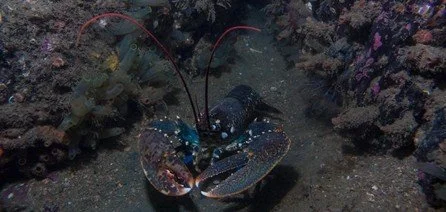
lobster out and about on sea bed
Introduction
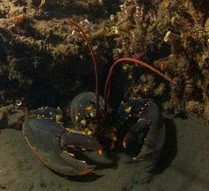
This month we are taking a look at what is probably one of the most commonly encountered species on an oceandivers Dublin Bay dive – the lobsters. Lobsters are members of the phylum Arthropoda, in the subphylum Crustacea. Most of us are familiar with the Crustacean grouping, which includes species like crabs, lobsters, shrimp, and barnacles. Our Lobsters here are European Lobsters (Homarus gammarus). As a charismatic species, they are easy to identify both under and out of the water. Lobsters have a hard exoskeleton “shell”, two large claws, two antennae, a longer body and a fan-like tail. Typically, the lobsters we see are a dark bluish-black colour.
So, how do lobsters reproduce? What do they eat? What threats do they currently face? And how can we dive with them safely? Let's dive in.
Where we can Find Them
Historically speaking, lobsters have now been around for quite a while. The first lobster-like organism evolved in the Devonian period, somewhere between 409 and 372 million years ago, with all of the groups branched out and present by the Carboniferous, some 353 to 318 million years ago [1].
As you would expect, the European lobster is present across Europe – from up along the Norwegian coast, across the UK and Ireland, and down into the Northern Mediterranean and Morocco. They are not found in the Baltic Sea, likely due to differences in salinity and temperature [2]. In Ireland, we can expect to see them on dives all around the Irish coast.
How do They Reproduce and What do they Eat?
When lobsters mate, females mate with the dominant males in the area. They more or less “temporarily pair bond” during mating, but do not pair bond for life, a common misconception. Interestingly, lobster fishing can affect these interactions through removing males from a wild population and changing the amount of potential mates there are – which can change their mating patterns [3] . Once they have reproduced, around autumn, the “berried” female will carry the eggs for ten to eleven months, before hatching some time in the summer. These eggs are carried on the underside of the lower half of their body.
As they grow, lobsters will periodically “shed” their exoskeleton as it becomes too small for them, and we can see these discarded exoskeletons on the sea floor on dives too. Lobsters can also grow back lost claws, although it can take many years for the new claw to grow to be the same size as their old claw.
Lobsters eat their food through using a combination of two main different parts of their mouth – mandibles and maxipilleds. The mandibles grip the food while some of the maxipilleds tear, and the rest direct the food pieces into their mouths [4] . I picture it sort of like an octopus or an elephant using all of their tentacles or trunk to tuck food into their mouths. In terms of diet they aren't fussy, and will take the opportunity to eat pretty much anything – from crustaceans, fish, and worms, to algae, when available. They both actively hunt prey and scavenge when there is less prey around.
Threats
A core pillar of protection for lobsters in many partially protected areas involves restrictions on catching them until after the females have laid their eggs, or a requirement to release berried females during specified times.
Something particularly interesting that has been studied in lots of fish species is the phenomenon of effectively “ageing down” a population through fishing, by removing lots of the bigger, older individuals. It has been shown that older females produce more eggs per gram of body weight, and better offspring. And this makes sense if we think about natural selection – the older females have survived against the odds, as the strongest of their group. There is not as much research in this area for crustaceans, but there is evidence that this is true for lobsters as well. Larval size when hatching has been linked to the size of the mother and the size of the egg when laid [5]. Because of this, overfishing of the larger females could have a significant effect on their populations going forward.
Diseases like shell disease can also impact lobster populations. A lot of diseases have emerged due to crustacean farming, and then subsequently moved to wild populations. Injuries to lobsters from other lobsters could also increase their vulnerability to these diseases, and so the number of lobsters in particular area is an important consideration [6].
Diving Guidelines
When you encounter lobsters on a dive, make sure to maintain a respectful distance. They can often be curious about us but generally will still keep a safe distance.
References
1. Bracken-Grissom, H. D., Ahyong, S. T., Wilkinson, R. D., Feldmann, R. M., Schweitzer, C. E., Breinholt, J. W., Bendall, M., Palero, F., Chan, T.-Y., Felder, D. L., Robles, R., Chu, K.-H., Tsang, L.-M., Kim, D., Martin, J. W., & Crandall, K. A. (2014). The emergence of lobsters: Phylogenetic relationships, morphological evolution and divergence time comparisons of an ancient group (decapoda: achelata, astacidea, glypheidea, polychelida). Systematic Biology, 63(4), 457–479. https://doi.org/10.1093/sysbio/syu008
2. Svåsand, T., Crosetti, D., García-Vázquez, E., & Verspoor, E. (2007). Genetic impact of aquaculture activities on native populations. Page 91.
3. Sørdalen, T. K., Halvorsen, K. T., Harrison, H. B., Ellis, C. D., Vøllestad, L. A., Knutsen, H., Moland, E., & Olsen, E. M. (2018). Harvesting changes mating behaviour in European lobster. Evolutionary Applications, 11(6), 963–977. https://doi.org/10.1111/eva.12611
4. Barker, P. L., & Gibson, R. (1977). Observations on the feeding mechanism, structure of the gut, and digestive physiology of the european lobster Homarus gammarus (L.) (Decapoda: Nephropidae). Journal of Experimental Marine Biology and Ecology, 26(3), 297–324. https://doi.org/10.1016/0022-0981(77)90089-2
5. Moland, E., Moland Olsen, E., Stenseth, N.C. (2010). Maternal influences on offspring size variation and viability in wild European lobster Hommarus gammarus.
6. Davies, C. E., & Wootton, E. C. (2018). Current and emerging diseases of the European lobster (Homarus gammarus): A review. Bulletin of Marine Science, 94(3), 959–978. https://doi.org/10.5343/bms.2017.1142
Photos by Daniel McAuley
